Dad's Oscar No-Show
Julia – 1977, Part 1
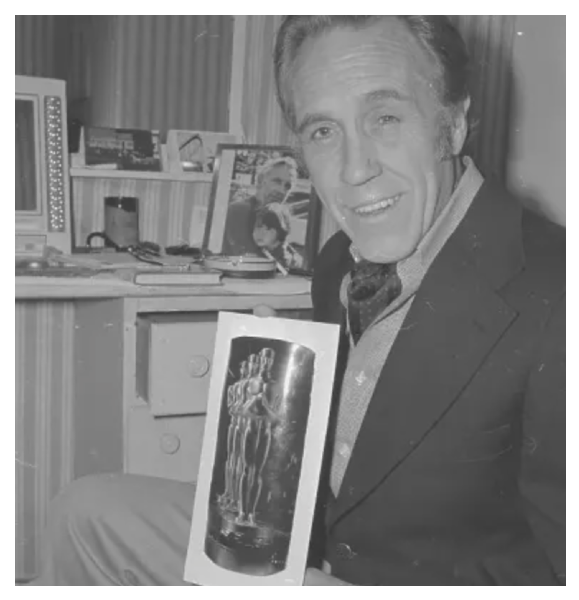
I'm writing this the day after the 98th Academy Awards, and The Guardian has an article about Oscar-winning absentees in the wake of winner Sean Penn's truancy (I think he did an amazing Greg Bovino send-up in One Battle After Another). Despite the sense that the article is covering the entirety of Oscar history, Jason Robards is not mentioned, even though he was a no-show when won the Best Supporting Actor award for the second year in a row, in 1978, playing Dashiell Hammett in Julia.
His formal excuse was that he was starring in Eugene O'Neill's A Touch of the Poet on Broadway, which was true. Also true is that he never really liked the whole Hollywood game.
But I have a theory about an underlying reason why he did not attend, and that was the controversy surrounding Vanessa Redgrave, who was a nominee for Best Supporting Actress in the same film and portrayed Julia herself.
Julia is about the heroic and radical activism of the title character and her friend, Lillian (Hellmann) in the face of the rise of Nazism. In that sense it is a classic Hollywood anti-Nazi film, always a favorite with the Academy. I'm going to write another post about the film itself, which, while a wonderful film, is also riddled with controversy, not for the politics but rather Hellmann's claim that it was autobiographical.
In the same year that Julia was released (1977), Redgrave had funded and was the onscreen host/interviewer in the little-seen documentary The Palestinian, which sympathetically chronicles the effect of Zionist incursions on Palestine and the Palestinian fight to retain their sovereignty. It includes Redgrave interviewing Yassir Arafat as well as medics and civilians, and an infamous photo of Redgrave smiling with a tank in the background. (Caveat: I have not watched the entirety of the film at this time, the cut on YouTube is over two hours long.) Vanessa had long been a politically active leftist and at the time called herself a Trotskyist, but The Palestinian crossed a line for some.
Back then, as now, support of Palestinian rights is controversial in America. At the ceremony, right-wing terrorist group Jewish Defense League picketed outside the theater, burning Redgrave in effigy and calling her "Arafat's whore."
Nevertheless, Redgrave won the award, but her win is remembered as one of the most notorious speeches in Oscar history, where she called out the behavior of "a small bunch of Zionist hoodlums."
Is she really going anti-semitic in an acceptance speech for a character who sacrificed everything to combat anti-semitism?
Of course not. If you listen to the entirety of the speech, she primarily focuses on the film, and salutes Jane Fonda and director Fred Zinneman. She applauds the Academy members for their commitment to free speech. Yes, she says the words "Zionist hoodlums" – there are audible boos from the audience – "whose behavior is an insult to the stature of Jews all over the world, and to their great and heroic record of struggle against fascism and oppression." She closes with gratitude and pledges to continue to fight against anti-semitism and fascism. Her poise is striking.
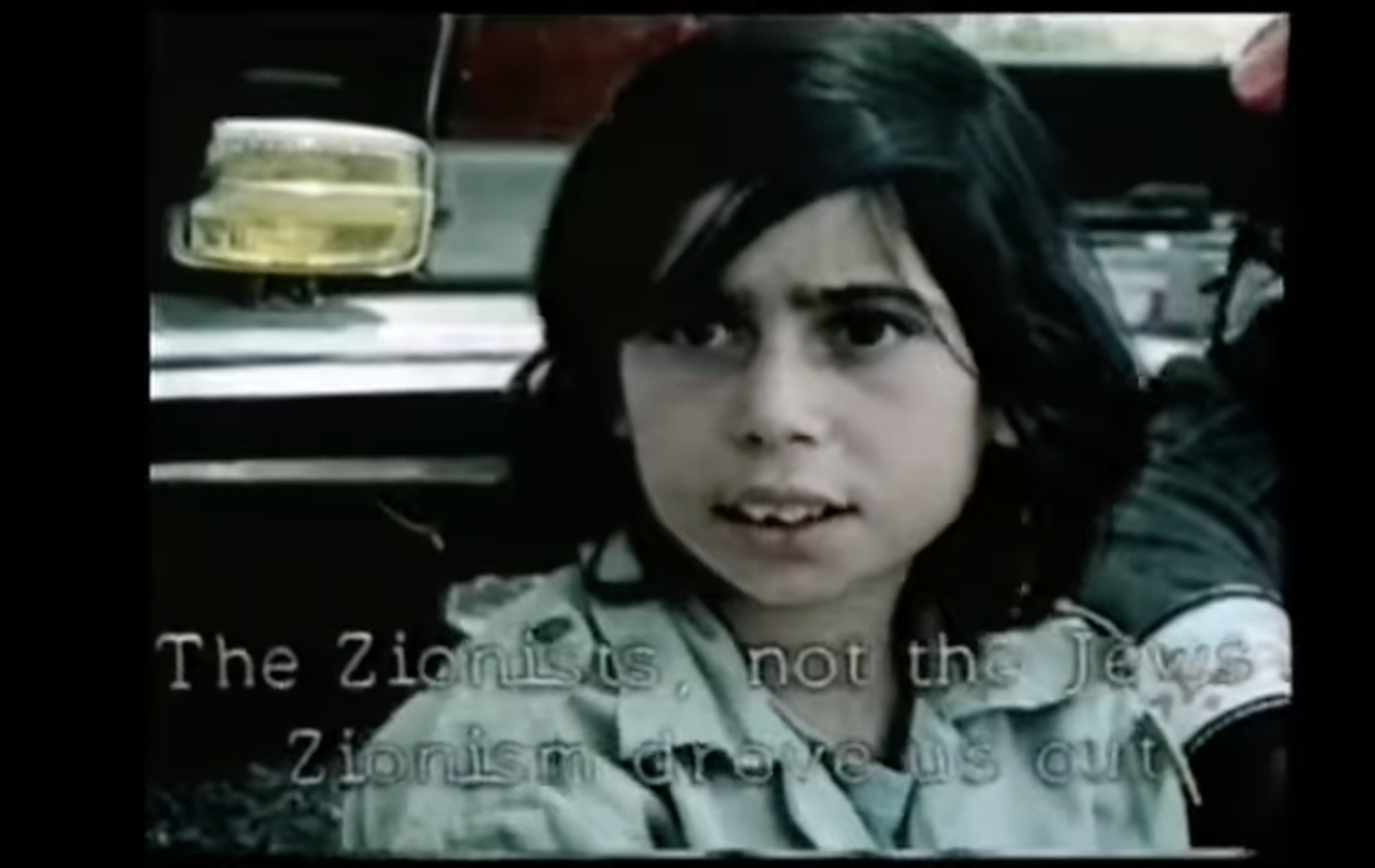
Redgrave, and the documentary itself, make a clear distinction between Zionists and the Jewish people. When Redgrave asked a Palestinian child "Who is the enemy," the response was "The Zionists, not the Jews."
There is a distinction between the belief that Jewish people should have a homeland and the religion of a people, but it's a distinction which continues to be blurred today, sometimes for political advantage. And there are many forms of Zionism, spanning the political spectrum and it gets really complicated. So I'll stop there. Suffice it to say, I firmly believe Vanessa was and is committed to the end of oppression for everyone, for human rights in general, and this was one issue of many for her over her lifetime.
Today in 2026 we're aware of many Oscar controversies over the years, political and otherwise. We've perhaps grown accustomed to political comments by actors in acceptance speeches or even by presenters – see Javier "No War Free Palestine" Bardem this year – but in 1978, political opining at an awards ceremony was nearly unheard-of. Her speech drew boos from the audience and reportedly at the after-party no one would go near her. Her career was certainly impacted for many years.
Vanessa was a fearless explorer of and advocate for political and social issues, much like her co-star in Julia, Jane Fonda, who was a fierce anti-war activist during the Vietnam War. Their public advocacy got them both vilified and ridiculed, and whether or not you agree with their politics, they were both incredibly brave. While Julia was a sort of rehabilitation for "Hanoi Jane's" career, it marked the apex of negativity and controversy for Vanessa Redgrave. I would love to know what kinds of conversations Jane and Vanessa had in those days, since Jane had really been through it, called a traitor to her country.
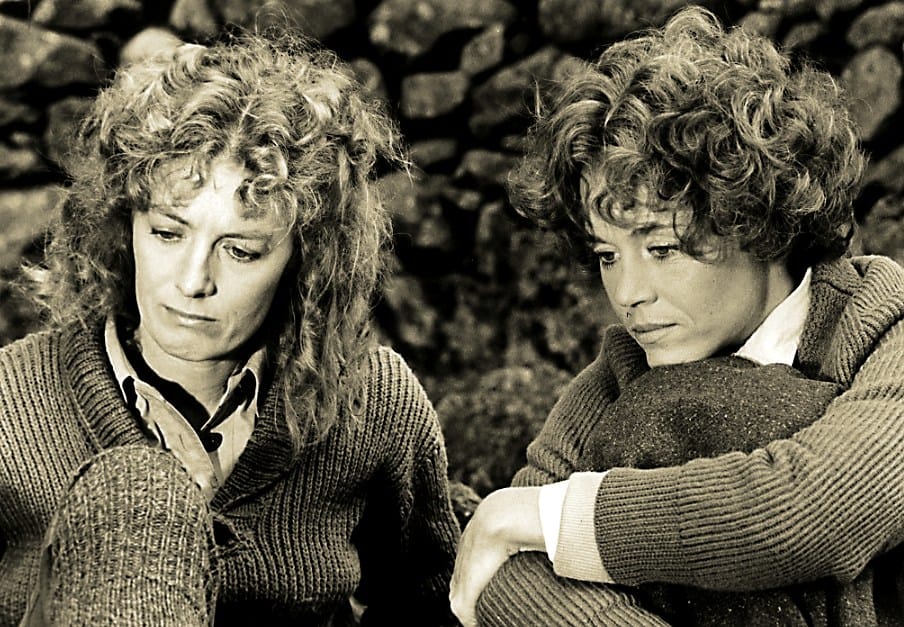
My dad and Vanessa were dear lifelong friends, going back at least to 1967 (Isadora) but perhaps earlier. (I remember just briefly meeting her after the show Vita and Virginia, which I absolutely adored.) I don't think my dad necessarily agreed with Vanessa's politics. And I suspect he didn't have a position on Jane's activism, either. I imagine he just chuckled and threw his hands up at it all, preferring to be more lighthearted, perhaps dodging it. I have a hunch actors look past a lot of "idiosyncrasies" in their colleagues and for my dad, the most important qualities in his showbiz friends were being a "regular" and kind person, not putting on airs and having a good laugh behind the scenes.
For the Academy Awards that year, I think he had a sense that it was all a bit of a mess and didn't want to get caught up, one way or another, with the hullabaloo that didn't have to do with the acting. Plus, he probably wouldn't win, since he had won the year before! I can also imagine my mom just saying "no" to him walking past picketers throwing death threats around – perhaps it felt too risky.
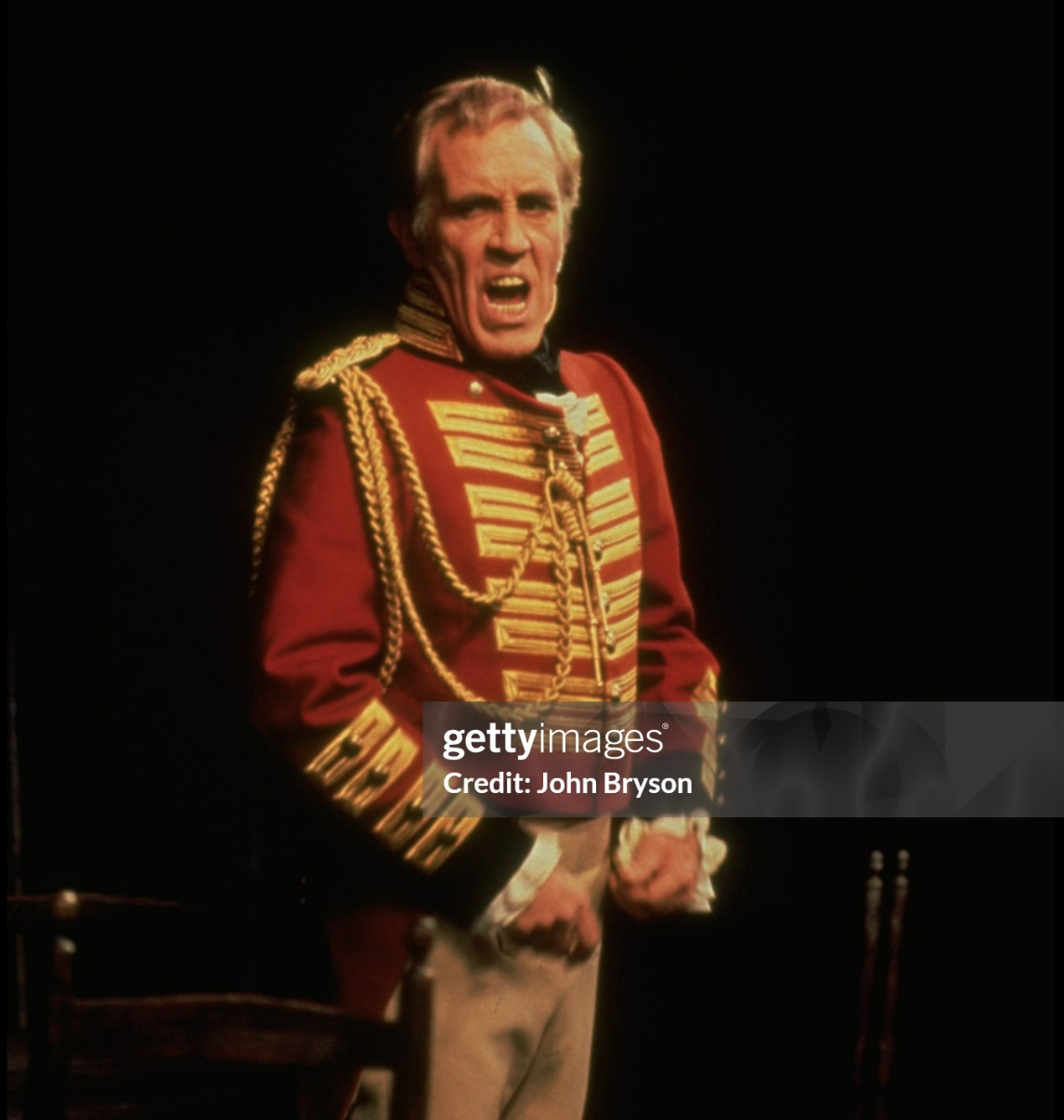
So, that night of the Academy Awards, he kept his commitment and walked onstage as Major Cornelius Melody at the original Helen Hayes Theater.
Can you blame him for sidestepping Hollywood that night? I have to admit, in some ways I wish he would have been the guy who attended the afterparty and sat with Vanessa, both of them with their Supporting Actor awards, ignoring the bullshit and just having a laugh with his friend.
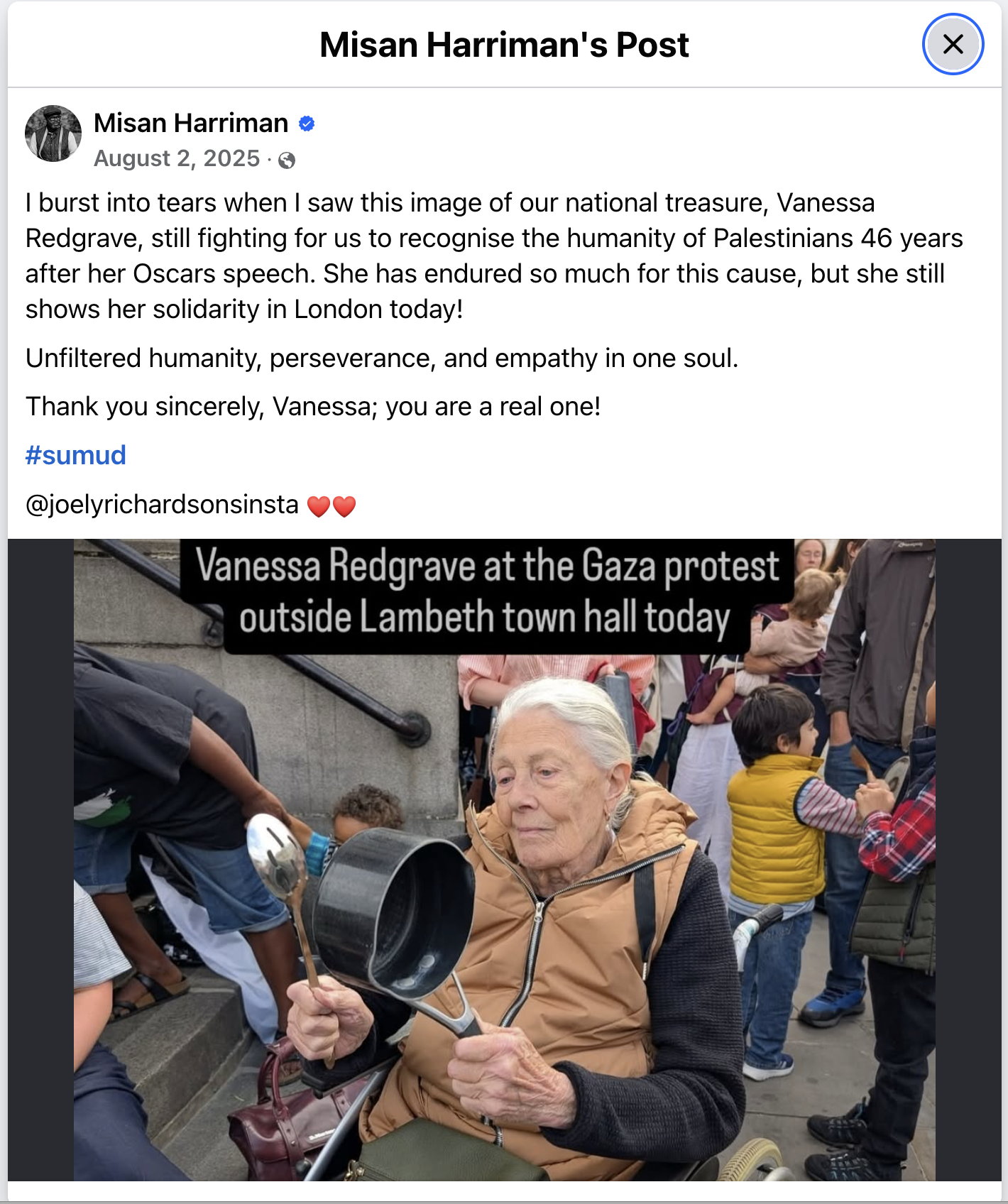
Vanessa, for her part, never apologized for her speech or for her advocacy for Palestinian human rights – she didn't feel she had anything to apologize for. And as recently as 2025 she is still showing up, even in a wheelchair.
For in-depth coverage of the Redgrave controversy, check out this excellent video done by BeKindRewind. I've gotten some of my information from this piece and I'm so impressed by the research and quality of work being done there.
And activism for my dad? He was politically active, always voted, but it was more in the form of financial support for candidates, mostly Democrats. As radical as the third-party candidate John Anderson in the 1980 presidential election (heavens to Betsy!). I remember my parents hosting a benefit at our house for Ernie Abate – who was he? – oh a Connecticut state representative. More publicly, my dad did PSAs about alcoholism and drugs, a very different form of activism from Vanessa and Jane.
This PSA clearly references the 1977 Oscars ceremony, which is discussed in this post. Yes, that's my mom!
That's all for now! A discussion of Julia the film to follow.